Mobile version

Neural network Darwinism 🧠

So, regarding the question of neural network Darwinism 🧠. You should understand that, essentially, the human brain represents a kind of broad neural network controller. It organizes groups of neurons into layers, and these layers, interacting with each other, form synapses. It is precisely the synapses that determine how generalization will operate.

According to various sources, a single neuron is capable of forming from 10,000 to 60,000 connections. Both numbers are certainly impressive. Through these synaptic connections, neurons perform signal generalization.

From an evolutionary perspective, we as a neural organism have gone further. The peculiarity of our neural system is that we use as the primary unit not so much the neurons themselves as the synapses. Synaptic connections become the key reference point.

From this arises a problem that can be called the problem of neural network Darwinism 🧬. It lies in the fact that we begin to depend on the synaptic connections that are formed. Thus, our nervous system in some sense continues to evolve, but without full control on our part.

The process of neural network Darwinism leads to neurons constantly restructuring synaptic structures by changing their connections. As a result, functions may either strengthen or weaken.

From here arises an important problem of modern medicine 🧪. When we talk about cell therapy, for example the transplantation of stem cells as a method of recovery after neural injuries, a fundamental limitation appears. The issue is not only — and not even primarily — the restoration of the neurons themselves. The problem lies in restoring their synapses, that is, the plasticity of synaptic connections, a fully developed technology for which essentially does not yet exist.

On Paralysis 🧠 How It Works. Part 1

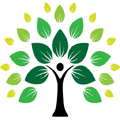
 As you can see, the image shows a tree 🌳Why a tree? Because technically, all types of paralysis that a person can experience—when we are talking about the motor system—are structured in exactly this way.

There is the corticospinal system, which begins at the top of the human brain — essentially, at the crown of the tree.

This corticospinal system gradually descends downward and transitions into the roots. Along the way, part of this system becomes the upper motor neuron, while in the roots it is predominantly represented by lower motor neurons and motor reflex arcs.


Why does it look like this? 🤔

Because the human body is, in fact, a structure containing a vast number of highly diverse muscles. These muscles can be activated in countless combinations. The crown of the tree — the human brain — is capable of iterating through these combinations and achieving specific postures.

The trunk of the tree mainly represents motor neurons that transmit information along the spinal cord, partially including the corticospinal tract, which forms systems of complex reflexes. The roots, in turn, represent the lower motor neurons.

32 Years with Multiple Sclerosis: My Life, Work, and the Path to Acceptance

I m 38 years old, and in essence I have been living with multiple sclerosis for 32 years. Formally, the diagnosis has not been fully closed—there are still rare theoretical possibilities such as hypomyelination or leukodystrophy—but the likelihood of those is extremely low. The most honest and accurate description today is this: secondary progressive multiple sclerosis, a chronic autoimmune degenerative disease of the central nervous system.

Where I live and why

I currently live in Belgorod. I moved here before the war and chose the city purely for practical reasons. Belgorod is one of the most accessible cities in Russia for wheelchair users: sidewalks, curb cuts, and overall infrastructure make it possible to move around relatively freely.

There is also a climate factor. Compared to Syktyvkar, there is significantly less snow here. This means that for most of the year I can use a regular wheelchair without having to rely on heavy, all-terrain models. In winter, of course, movement is still difficult for a couple of months, but in spring and autumn there is almost no snow, and temperatures are usually above zero, sometimes even hot.

The building where I live is also fairly accessible—I can leave the house independently in my wheelchair, which has a major impact on my quality of life.

An Exoskeleton as a Form of a Path

Sometimes life unfolds in such a way that text becomes the only honest way to record what is happening. Not to justify oneself, not to explain, but precisely to record—to leave a trace in material. That is how the book “Neurophysiology for Dummies” came into being.

Where Life Is Rolling

After the book, there was no sense of relief. Rather, there was silence, in which everything else became audible. The idea of a marathon—around which plans and expectations had been built for a while—began to fall apart. Not dramatically, without loud gestures—it simply became clear that this was not the right vector for now. Perhaps not a cancellation forever, but a pause—a pause that was honest.

Meanwhile, life continued moving in a very material direction. I bought an apartment. Not as a symbol of success, but as a necessity for stability. A place where one can exist w
ithout explanations. Where the walls know more about me than most people do.

4 years have passed, part 3

 I have good news for you, girls and boys, my health condition in recent years has stabilized so much that I decided to look for work again. Yes, yes, I go back to work, again to the front end development. What's the point? Because I can, because I can again!

What is the point then in writing in this part of blog if it does not have an audience? Well, answer is quite simple, because I will have to show something to the employer and develop trust. The Hapibai project is a wonderful project in terms of front-end and data science. This is a wonderful project in terms of internal growth and development. And for audience, it is just  a matter of time. I can buy ads, I can tweak YouTube, write articles, it's just a matter of money.

And here is the last video at the time of 2020. Walk for 1 km. It has took about 1 hour. The road is uneven, gravel, village. It is also extremely difficult for me to maintain balance when implementing complex movements of the hips. Why? This is a good question and debates on it are underway and probably will continue for more than one millennium. If you, my dear readers, have a desire to understand this, then you should look in the theory of GMFCS.

4 years have passed, part 2

Somewhere in 2014 I quit my job as a programmer and began to invest all my free time in a project on neurogenesis and solution for SPMS. In those years, I faced a number of problems - I was crawling, I had paresis in my right hand, and I was also extremely frightened by negative dynamics of my MS development. If I had to go somewhere on the street, go up / down the stairs, my father often dragged me around on his neck. I clung to him, hung on him and he dragged me around. All other times i used a wheelchair.

I worked without an employment contract, one might say I was a freelancer, sometimes it was good, but sometimes it was bad. So, for example, I was not able to receive unemployment benefits after being fired. And there also was no sense in staying at work, even if I had signed an employment contract and worked for another half a year, expecting that I could then apply for unemployment benefits. Because in this situation, only a cemetery and a coffin would await me.

Video above is August 24, 2020. It has became noticeable that my gait became even stronger, that MS not only failed to grab a piece of my legs over the past year, but he also weakened a little. Why? How ? The question is extremely interesting.

4 years have passed, part 1

Hello everyone. It has been 4 years since my last article in the English variation of this blog. This is largely due to the fact that there are not so many people who look into this part. Therefore, there was no point in trying to develop this part of the blog. No audience. But nevertheless, yes. Over past years, so many events have happened in my life, but first things first.

Startup with the challenge - cure for SPMS, i haven't given up it.  In fact, the project continues to move and this is largely due to my stubbornness, thanks to the fact that I managed to find some keys to the problem in my childhood.